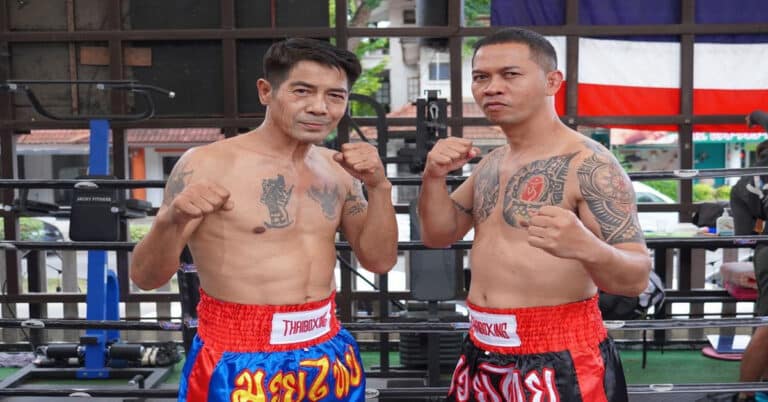
Chamuekpet Hapalang: Thailand’s Greatest Stadium Champion
Among the greatest fighters in Muay Thai history, few names command respect like Chamuekpet Hapalang. Across the Bangkok circuit of the ’80s and ’90s, he built a career that remains unmatched to this day, winning nine Lumpinee and Rajadamnern stadium titles across seven weight classes.
Yet, for all his accolades in a 26-year career, his journey involved constant evolution—shifting from a high-volume knee fighter to an opportunistic technician, showing that adaptability is the mark of true greatness.
Intro to Muay Thai (1962-1979)
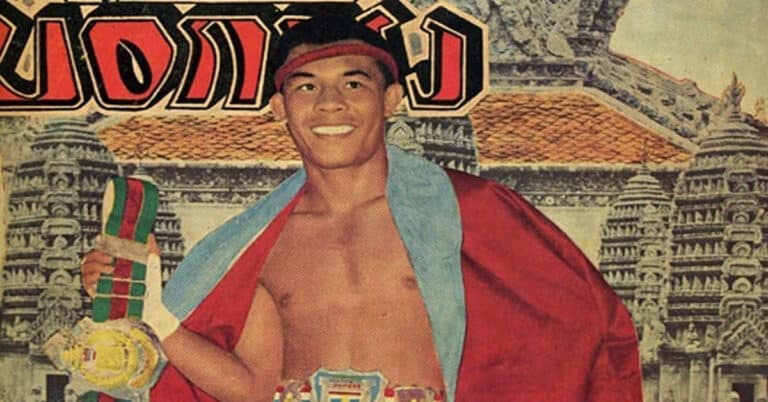
Chamuekpet was born in August 1962 in Chonburi, Thailand. Inspired by his older brother, he began training at Sor Worakulchai Gym, where he was mentored by Dieselnoi Chor Thanasukarn. At 12 years old, he had his first fight in his local area before progressing to provincial stadiums and eventually the elite Bangkok circuit.
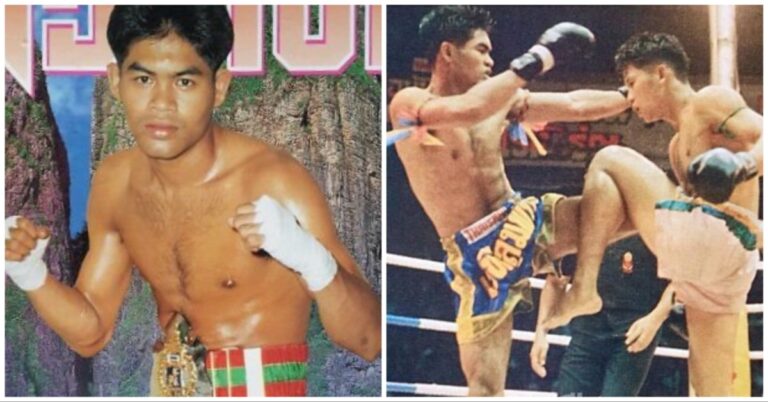
By 15, he debuted at Rajadamnern Stadium. Starting as a Muay Bouk (pressure fighter), he gradually shifted towards a focus on clinching and knee strikes—a skill that would later earn him the nickname “Mr. Computer Knee.”
First Titles & GOAT Contention (1980-1984)
At 18, Chamuekpet won his first major title, defeating Samart Payakaroon for the Lumpinee Pinweight (102 lbs) Championship—an upset given Samart’s reputation as a prodigy. The following month, he defended the belt against Paruhatlek Sitchunthong, then claimed the Rajadamnern Mini Flyweight (105 lbs) title against Kiophit Chuwattana in October.
A few months after winning the Lumpinee Pinweight belt from Samart, the pair faced one another in a December rematch. Samart, the reigning Rajadamnern Mini Flyweight champion, faced Chamuekpet, the reigning Lumpinee Pinweight champion.

Chamuekpet pressed forward, but Samart controlled the fight with intelligent footwork and counters. As the contest wore on, Chamuekpet became bloodied and struggled to close the distance. After five rounds, Samart won on points.
In October the following year, Chamuekpet won the Lumpinee Light Flyweight (108 lbs) title by beating Narak Sipkraysi over five rounds. A year later, he moved up in weight yet again, winning the Lumpinee Flyweight (112 lbs) title against Kongtoranee Payakaroon (Samart’s older brother) on his second time of trying.

By the end of 1982, Chamuekpet had won seven out of nine fights. He split two bouts with Kongtoranee Payakaroon, losing in March but claiming the Lumpinee Flyweight title from the defensive master in June. He also defeated Phanmongkol Hor Mahachai three times.
In May 1983, he battled it out with the aggressive muay matt Samransak Muangsurin in what turned out to be a kicks vs punches bout, with Chamuekpet taking the decision. The win earned him a shot at the Lumpinee Bantamweight (118 lbs) title, which he claimed by defeating Sornslip Sitnoenpayoon in August.
In November 1983, he faced an old adversary in Samart Payakaroon. Samart dictated the fight with his speed and reach, keeping Chamuekpet at bay with kicks and punches. Chamuekpet struggled to close the distance and fell behind on the scorecards, with Samart winning a clear decision after five rounds.

Chamuekpet’s struggles continued in 1984, losing his Lumpinee Bantamweight title to Kongtoranee in the main event of Suek Wan Songchai. Kongtoranee controlled the fight with immaculately-timed kicks, repeatedly disrupting Chamuekpet’s balance. By round four, he had shut down Chamuekpet’s knee game and clinch, cruising to a unanimous decision on all three scorecards.

GOAT Resurgence (1985–1987)
Following the defeat to Kongtoranee, Chamuekpet faded from the spotlight for a time, taking a break from competition.

In May 1985, after six months out, Chamuekpet returned with a unanimous decision win over Boonnum Sor Jarunee at Rajadamnern Stadium. The fight was fairly close early on, but by the fourth round, Chamuekpet was smothering Boonnum in the clinch and landing knees, shifting the odds to 20-1. Boonnum tried to rally late but couldn’t turn the fight around.

His other performances that year against fighters like Samransak and Manasak earned him the Sports Writers Association of Thailand Fighter of the Year Award.
He carried his momentum into 1986, adding another Lumpinee title and defending his Rajadamnern belts. In February, he faced Jampatong Na Nontachai at Rajadamnern Stadium, controlling the “Master of Neck Kicks” with left body kicks and knees to win on points.

In June, their rematch played out differently. Jampatong dropped Chamuekpet with a left high kick early on before finishing him with a right high kick. The event drew over 1.2 million baht in ticket sales.

In their August rematch, Chamuekpet closed the distance and drowned Jampatong in the clinch. Jampatong fought back at range but was unable to keep him off. Chamuekpet won on points, claiming an honourary trophy at an event that drew 1.9 million baht.

In October 1987, he dominated Manasak Sor Ploenchit at Lumpinee Stadium, handing him his first loss of the year. Chamuekpet’s body kicks put Manasak on the back foot early, and by round three, knees and kicks left him an 8-1 underdog. Chamuekpet sealed a decisive win with a final barrage of strikes.

During this epoch, Chamuekpet took on and defeated elite names like Chanchai Sor Tamarangsri, Sangtiennoi Sor Rungroj, and Wangchannoi Sor Palangchai, reinforcing his position among Muay Thai’s all-time greats.
Thriving in the Golden Era (1988–1993)
As Chamuekpet moved into the late 1980s, the competition only intensified.
In March 1988, Chamuekpet went to war with Langsuan Phanyutthaphum in a clinch-heavy battle where both fighters hammered each other with knees for four rounds, refusing to give an inch. Chamuekpet worked tirelessly to break Langsuan down, but the hard-headed knee fighter stood firm and fired back.
As they sat in their corners before the final round, chaos erupted. A gunshot rang out from Chamuekpet’s side of the ring, throwing the stadium into mayhem. Fans dove for cover, some hitting the ground, others pushing through the panicked crowd. Several people were injured as police rushed in to restore order.
The shot hit Ngow Hapalang, a key figure in Chamuekpet’s camp. He was critically wounded and later died from his injuries. With the stadium in turmoil and the tragedy overshadowing the fight, officials declared it a no-contest.

Less than two months later, the pair met for a rematch in the main event of Suek Wan Songchai at Lumpinee Stadium.

Chamuekpet controlled the fight with knees and middle kicks, shutting down the former Lumpinee Light Flyweight Champion’s attacks, despite his usual persistence in closing the gap. After five rounds, Chamuekpet secured the points victory.

In May 1990, Chamuekpet faced Saengtiennoi Sitsurapong for the fourth time, this time at Rajadamnern Stadium. Saengtiennoi started strong, dropping Chamuekpet with a left uppercut in round two, but the 126 lbs weight cut began to take its toll on “The Deadly Kisser” from Pathum Thani. Chamuekpet capitalised, pushing forward with knees and kicks to secure a unanimous decision win, bringing their rivalry to three wins and one draw in his favour.

In December 1992, Chamuekpet faced the “Black Pearl” Oley Kiatoneway at the King’s Birthday event. He struggled early against Oley’s defence but found an opening in round four. A clean one-two led to more punches and knees slipping through, eventually dropping Oley. Though Oley beat the count, Chamuekpet quickly finished him with a clinch knee and another one-two.
In their rematch three months later, Oley used his classic slips, side-steps and counters to redirect Chamuekpet’s pressure, winning by decision.
Even as younger fighters emerged in the early ’90s, Chamuekpet remained a force in both Lumpinee and Rajadamnern.
Evergreen Warrior (1994–2000)
By the mid-1990s, Chamuekpet was an outlier in the sport, still competing while most of his peers had retired. He shifted from high-intensity pressure to a more composed, tactical style, controlling fights with teeps and counters. Under Samart Payakaroon’s guidance, he refined a Muay Femur approach.
In March 1994, he reclaimed the Rajadamnern Super Bantamweight (122 lbs) from Paideang Lerksak Gym via decision. In July, he won his ninth and final stadium title, knocking out Chaidet Kiatchansing in the third round for the Rajadamnern Featherweight (126 lbs) belt. This feat firmly secured his place as the most decorated Muay Thai fighter of his era with five Rajadamnern belts and four Lumpinee belts across seven divisions.
Two months later, he dominated their rematch with teeps and counter knees to win by decision. His ability to outclass younger, stronger opponents earned him the nickname “Father Time is a Myth” in Thai media.

In January 1995, Chamuekpet travelled to Tokyo for his third international fight, facing Atsushi Tateshima in a 127 lb Muay Thai Super Fight at NK Hall. At 33, struggling with illness and limited training, Chamuekpet relied on teeps and counters to minimise energy expenditure. Tateshima’s attempts to pressure him failed, as Chamuekpet repeatedly knocked him off balance, winning by unanimous decision. The fight aired in Thailand, where younger fans mistook Chamuekpet for a finesse-based fighter rather than the aggressive knee specialist of his prime.

In 1997, Chamuekpet transitioned to professional boxing, winning the PABA Featherweight Championship, which he defended four times before retiring from competition in 2000 due to an arm injury sustained in his final fight.
Trainer and Legacy (2000–)

Chamuekpet’s ability to evolve and outlast generations of elite fighters is what sets him apart. Over a career spanning more than two decades, he consistently proved himself against the very best, adapting his fighting style to remain a force in the sport. His record-breaking titles, wins over legends, and longevity in Thailand’s top stadiums place him among the sport’s all-time greats.
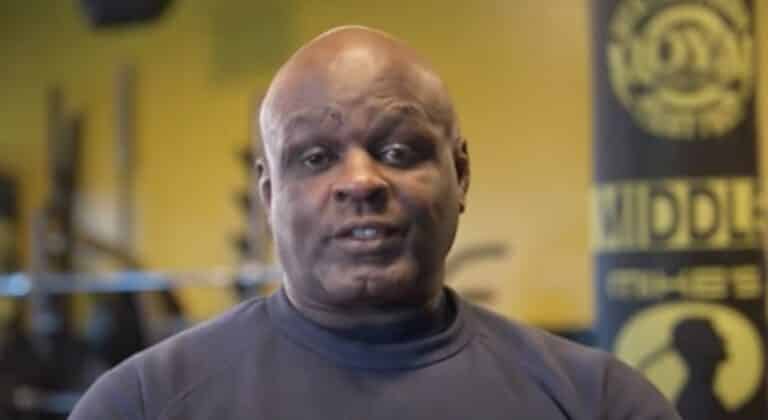
Following his retirement in 2000, Chamuekpet moved to Japan, where he established himself as a respected trainer.
Related Muay Thai Posts
-

Ernesto Hoost: Mr Perfect The Legendary Figure of Kickboxing
-

Apidej Sit-Hirun: The Golden Leg & Muay Thai Fighter of the Century
-
Boonlai Sor Thanikul “The Iron Twin” – Biography & Best Fights
-
Sagat Petchyindee: Biography, Fight History & the Street Fighter Link
-
Nong-O Hamamuaythai: Muay Thai’s Timeless Muay Femur Master
-
Who was the Best Muay Femur in the 1990s?
-
Who was the Best Muay Tae in the 1990s?
-
Best Muay Thai Fighters of the Golden Era
-
Who was the Best Muay Bouk in the 1990s?